How did a Model X tow a Dreamliner?
In Melbourne, a Tesla pulled a 130-tonne passenger jet. The most useful place to look in the footage is down at the wheels.
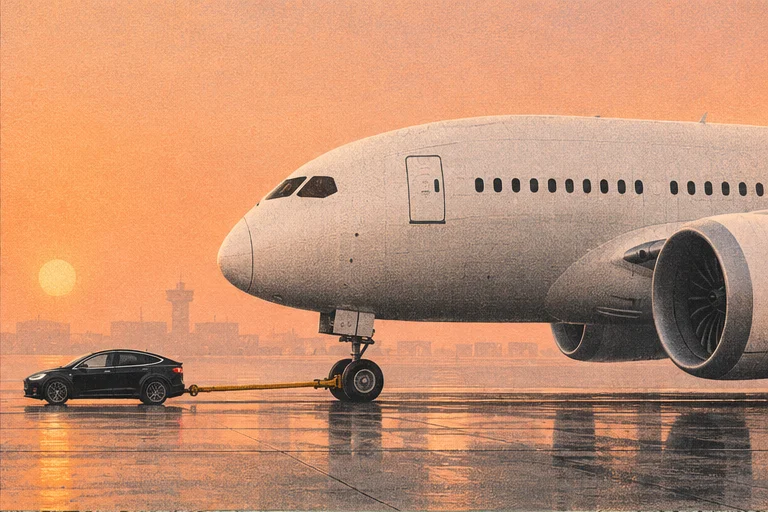
A Boeing 787-9 makes an odd trailer. Its wings extend far beyond the width of the car ahead of it. The driver of the Tesla has a windscreen full of taxiway. Behind that driver is an aircraft that Guinness World Records weighed into the record book at 130 metric tonnes.
Qantas filmed the tow at its Melbourne maintenance base in May 2018. The car was a Model X P100D. Pause the film with both vehicles in view and look at the aircraft tyres. The landing gear is already doing one enormous job. It carries the weight of the aeroplane into the pavement. The Tesla supplies a pull along the ground.
What a slow start buys you
Getting the plane moving takes force to overcome resistance and build speed. Give a 130,000-kilogram object ten seconds to reach one metre per second and its average acceleration is one tenth of a metre per second squared. That part of the job alone takes 13,000 newtons. Allow twenty seconds and the acceleration part halves. Those are illustrative numbers. The film gives us no measured force at the hitch.
Boeing’s airport planning manual treats a tow as a problem with several inputs. How steep is the pavement? What grip do the tug’s tyres have? Is the tug pushing against thrust from an idling engine? The same aircraft can demand very different equipment in different conditions.
The Model X record captures a particular achievement on a particular piece of pavement. The astonishing number on the certificate belongs to the load resting on the jet’s wheels. Watch the wheels begin to turn and you can see exactly which part of that load the little car took on.