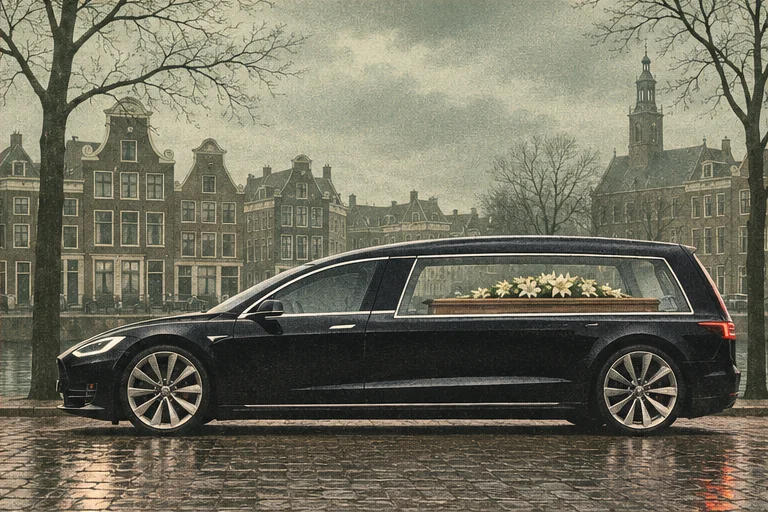
Who teaches a Tesla to dance?
A light-show creator gets a musical score with an unusual set of instruments. One of them is the charge-port door.

Picture a drummer hitting a snare twice. On the first hit you want the left front light to flash. On the second, the right. Leave the next beat dark and the little pause becomes part of the performance. Someone has to make each of those decisions.
The instrument for writing them is xLights, a free, open-source program for designing lighting displays. A creator brings in a song, lays effects along a timeline and previews the result. Tesla supplies a project that maps those effects onto a car. A composer can open a group of lights and work on the left and right sides separately.
Some performers need a head start
The lights and the moving parts have different ideas about timing. A lamp can answer a cue almost instantly. A Falcon Wing door on a supported Model X has a whole swing to complete. The author can plan the movement across a phrase of music, then use the lamps to pick out individual beats. Tesla’s own example files give a newcomer a finished score to take apart.
The work travels on a USB drive as two companion files. One holds the sound. The other holds the sequence of cues. A creator can check that sequence against Tesla’s published limits on a computer before bringing it to a car.
That pairing answers a small mystery for anyone who has watched a parked Tesla keep time. A song alone contains no instruction to open a charge port. Somewhere, a person listened to the track, picked that moment and gave the door its entrance.